
Zoologic: Brainrot Evolution!
Sunday.ggArcade
3.483.00 Reviews
- Version
- 0.66
- Installs
- 5.00M
- Age Rating
- Everyone 10+
Screenshots
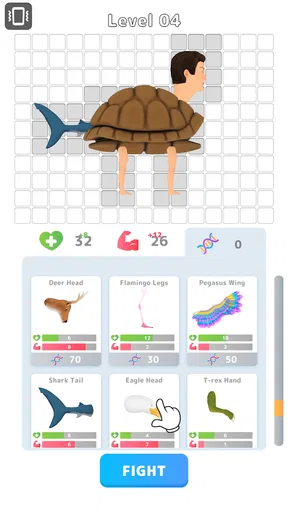
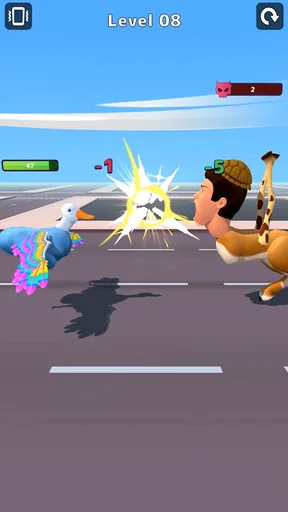
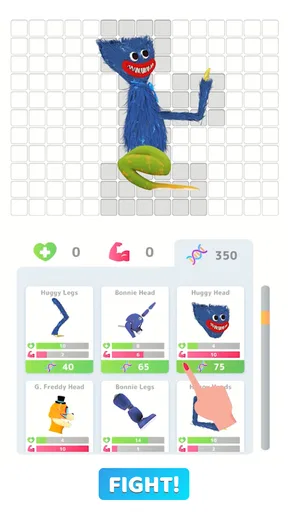
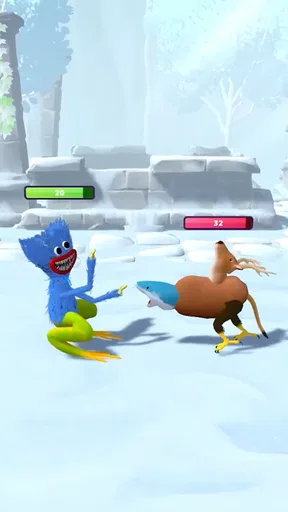
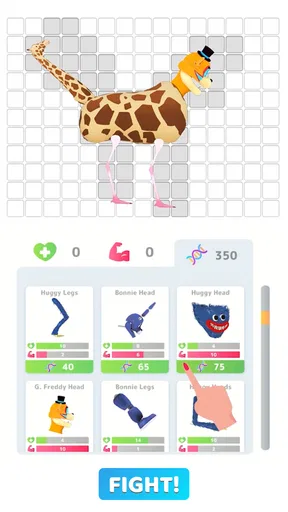
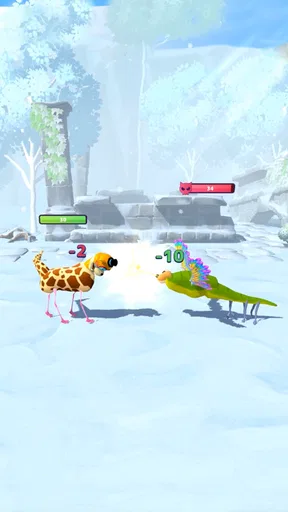
Our Review of Zoologic: Brainrot Evolution!
 Analysis by Appyee
I spent time with Zoologic: Brainrot Evolution! as a quick-play arcade game built around combining strange animals and watching the results develop into increasingly odd hybrids. Its appeal is immediate: the idea is easy to understand, the presentation aims for comedy, and each short session gives me a simple reason to make one more move. It is the sort of game I can open when I have a few spare minutes rather than something I need to schedule a long evening around.
That simplicity is also the key to judging it fairly. This is not trying to replace a deep strategy game, a traditional puzzle title, or a large competitive action game. It sits in a lighter space, where experimentation and amusing discoveries matter more than precision or a complicated story. I found the best experience came from treating it as a casual arcade diversion, not as a serious progression challenge.
How the animal-merging idea works in practice
The central loop is based on bringing animals together, evolving the resulting creatures, and using those creations in battles. That gives the game three connected reasons to keep playing: I can look for a new combination, improve the collection of hybrids I already have, and then see how those choices perform when the action shifts toward fighting.
The merging concept is approachable because it does not demand a long tutorial before the basic idea makes sense. I quickly understood that each decision is less about memorizing a large rulebook and more about noticing what the current board or collection is offering. The fun comes from the contrast between familiar animal ideas and the deliberately ridiculous results that follow.
That tone is important. The game’s humor is not a small decoration around a conventional arcade experience; it is one of the main reasons to continue. Some players will enjoy the surprise of seeing what a combination produces, while others may find the deliberately chaotic style tiring after the novelty fades. I would describe it as playful rather than polished in a serious, competitive sense.
Sunday.gg is the developer behind this arcade release. It arrived on December 29, 2021, and the current version is 0.66. It runs on Android devices using Android 7.0 or later, which makes it accessible to many older phones as well as newer hardware. The age guidance is Everyone 10+, so parents should still consider whether the exaggerated battle humor and unusual creature designs fit the child using the device.
The game is free to access, which changes the value question considerably. I can try the main experience without paying an entry price, so there is no need to decide whether the concept is worth a purchase before seeing how well the loop suits me. At the same time, free access does not automatically mean unlimited value: the real test is whether the merging, evolution, and battles remain enjoyable after the first wave of curiosity.
Why the first sessions are easy to enjoy
The strongest early quality is clarity. A player who likes casual arcade games can understand the broad objective without needing specialist knowledge. The combination mechanic provides a visible sense of cause and effect, while the animal theme makes experimentation feel less abstract than matching anonymous shapes or managing numbers.
I also liked that the game has a natural “just one more attempt” rhythm. A nearly completed evolution or an interesting creature pairing can make a short session feel unfinished in a satisfying way. This works particularly well during small gaps in the day: waiting for a bus, taking a break between tasks, or relaxing for a few minutes before bed.
One useful habit is to avoid making every available combination immediately. When the board or collection gives me several possible actions, I get more value by pausing to consider which move opens a new route and which move merely clears space. That small delay turns the experience from automatic tapping into light decision-making, without making it feel like a demanding puzzle.
Another practical tip is to treat the hybrid collection as a record of experiments rather than only a ladder of power. If I focus exclusively on the strongest-looking result, I lose much of the humor that makes the game distinctive. Trying an unusual pairing can be worthwhile even when it is not the most efficient route toward a battle-ready creature.
The battle side gives the merging loop a purpose beyond collecting odd designs. It lets me see whether my choices have practical consequences, rather than leaving evolution as a purely visual reward. However, players looking for highly technical combat should keep their expectations measured. The attraction is the connection between absurd creature-building and arcade action, not the depth associated with a dedicated fighting or strategy game.
Where the free model offers good value
Because the game is free, its strongest value is low-risk entertainment. I can install it, learn the central idea, and decide for myself whether the humor lands. That is a better proposition for a short-session player than a paid title whose appeal depends on enjoying a very specific gimmick from the beginning.
The free entry also suits people who share a device with family members or want something easy to demonstrate. Showing a strange hybrid to another person creates a more social kind of value, even when the game itself is played alone. It can become a conversation starter: one person experiments with a combination, another guesses what might appear next.
Its broad reach is reflected in its audience size, with more than five million installs and an average rating of 3.4 from roughly 3.3 thousand ratings. I would not treat that rating as a final verdict, but it does suggest a mixed reception rather than universal approval. The game has enough of a hook to attract a substantial audience, while the score is a useful reminder that its unusual style and repetitive arcade structure will not suit everyone.
The most important value trade-off is time. A free game can still be expensive in attention if it encourages repetitive sessions without offering enough new decisions. In my experience, Zoologic works best when played in compact bursts. If I keep going after the merging choices begin to feel routine, the humor has less impact and the loop can start to feel like maintenance rather than discovery.
That is why I would not recommend judging it by the number of hours it can occupy. Its value is closer to a snack than a full meal: convenient, amusing, and easy to return to, but not necessarily satisfying as a single long-form game. For a free arcade title, that can be perfectly acceptable, provided the player wants short entertainment rather than a deep commitment.
The trade-offs behind the silly presentation
The same chaotic personality that makes the game memorable can also create friction. Players who prefer clean visual design, calm pacing, or carefully explained systems may find the brainrot-inspired presentation noisy. The humor is intentionally exaggerated, so the game is not a natural fit for someone who wants a restrained animal-collection experience.
There is also a difference between discovering a hybrid and feeling that the discovery matters. Early combinations are naturally more exciting because the player is still learning the possibilities. Later, the experience depends on whether the new creatures and battles continue to provide meaningful variation. If novelty is your main motivation, you may enjoy the beginning more than the longer run.
I would also be cautious about expecting the title to deliver the same satisfaction as a conventional puzzle game. A puzzle specialist may want carefully balanced solutions, transparent scoring, and a clear sense that every move can be optimized. Zoologic is more playful and less formal. Its decisions matter, but the mood is closer to improvisation than to solving a tightly designed logic challenge.
Compared with a standard idle or merge game, the battle element gives the animal combinations a livelier destination. Compared with a dedicated arcade battler, though, the merging theme places more attention on collection and evolution than on refined moment-to-moment combat. That middle position is its identity, but it also means players coming from either side may find something less complete than the genre they already prefer.
There is a practical device question as well. Android 7.0 compatibility is helpful for older phones, but compatibility alone does not guarantee that every device will feel equally comfortable. On a smaller or slower handset, crowded creature designs and rapid arcade interactions may be less pleasant than on a modern screen. I would try the free version before investing serious time, especially if the phone is old or storage is limited.
The age guidance of Everyone 10+ is another reason to consider the audience rather than assuming the animal theme makes it suitable for every child. The game’s creatures are comic and strange, but the battle framing may not appeal to parents seeking a quiet educational animal app. For children who enjoy silly character design and simple arcade goals, it may be a better match than for those who want realistic wildlife content.
Small strategies that make sessions more satisfying
My first recommendation is to set a session goal before opening the game. I might decide to focus on discovering a new hybrid, improving a battle lineup, or simply playing until a short break ends. This prevents the free-to-play loop from swallowing time without a clear purpose and makes it easier to stop while the game still feels entertaining.
Second, I would separate experimentation from efficiency. During one session, I can deliberately try combinations that look amusing or unpredictable. During another, I can make more conservative choices aimed at building a useful battle setup. Mixing both approaches is possible, but switching goals without noticing can make the game feel less coherent.
Third, pay attention to the transition between evolution and battle. If a creature looks funny but does not help the current objective, it may still be worth keeping as a collection milestone, but it should not automatically become the center of the next battle decision. This distinction helps avoid the common mistake of assuming that the most entertaining hybrid is always the strongest practical choice.
Finally, use the rating as a prompt to test your own tolerance for repetition rather than as a reason to dismiss the game. With 83 written reviews alongside the broader rating count, there is enough public response to show that experiences vary. I would spend a short trial session checking three things: whether the humor makes me smile, whether the merging decisions remain interesting, and whether the battles give my experiments a satisfying payoff.
Who should install it, and who should skip it
I think Zoologic is a good fit for casual players who enjoy absurd character ideas, quick arcade sessions, and collection loops that do not require a large time commitment. It is especially suitable for someone who wants a free game to sample without first learning a complex control system. The animal theme also makes it easy to share with a friend who enjoys showing off unusual discoveries.
It is less suitable for players who want a serious competitive environment, a realistic animal game, or a carefully structured story campaign. I would also point puzzle fans toward a more traditional logic title if their priority is elegant problem-solving rather than playful experimentation. Likewise, someone who dislikes repetitive progression should not assume that the free price compensates for a loop that may eventually feel familiar.
For a parent choosing something for a child, I would look beyond the simple animal label. The Everyone 10+ guidance is the relevant starting point, and I would consider the child’s response to comic battles and intentionally bizarre hybrids. For an adult seeking a relaxing break, the game may work better when treated as a light diversion than as a major long-term hobby.
My verdict on its free value
After playing it, I see Zoologic: Brainrot Evolution! as a specific kind of arcade game: free, strange, immediately understandable, and strongest when its merging surprises still feel fresh. Sunday.gg has built the experience around a clear hook, and that hook is enough to make short sessions enjoyable for the right player.
My recommendation is to try it if you want low-commitment entertainment and the idea of evolving ridiculous animal hybrids sounds genuinely funny to you. The free access makes that decision easy because you do not have to pay before discovering whether the style works. I would keep sessions short, experiment rather than chase only efficiency, and judge the game by the pleasure of its loop rather than by expectations borrowed from deeper strategy or puzzle titles.
I would skip it if you are looking for substantial combat depth, realistic creatures, or a game that constantly introduces sophisticated new systems. Its mixed 3.4 average is consistent with my view: there is a real, distinctive idea here, but the same repetition and exaggerated presentation that entertain one player may push another away. My final call is “try it, but keep your expectations casual.” As a free arcade download, it earns that chance; as a replacement for a deeper game, it does not.
Verdict
Strengths of Zoologic: Brainrot Evolution!
- Simple tap-based gameplay is easy to learn within minutes.
- Evolution mechanics provide a clear sense of short-term progression.
- Bright animal designs make the game visually appealing to younger players.
- Quick sessions work well for casual play during short breaks.
- Offline play may be convenient when an internet connection is unavailable.
Limitations of Zoologic: Brainrot Evolution!
- Progress can feel repetitive once the initial discovery phase wears off.
- Frequent ads may interrupt gameplay or slow down progression.
- Some upgrades can require considerable grinding or repeated tapping.
- The game may offer limited strategic depth for experienced players.
- In-app purchases could make faster progress more tempting.
Other Releases by Sunday.gg
View All
Cat Escape: Virtual Pet Game
Simulation4.4

Hypermarket 3D: Store Cashier
Simulation4.4

Dog Escape: Cute Pet Care Life
Simulation4.4

Spinner Merge
Arcade3.5
Similar Picks in This Category
View All
Subway Surfers
SYBO Games4.6

Stickman Party 234 MiniGames
PlayMax Game Studio4.6

Subway Princess Runner
Ivy4.4

Temple Run
Imangi Studios4.2

Zombie Tsunami
Mobigame SAS4.6

Stack Ball - Crash Platforms
CASUAL AZUR GAMES4.5
Frequently Asked Questions
What is Zoologic: Brainrot Evolution!?
Zoologic: Brainrot Evolution! is a casual evolution game built around collecting and combining amusing animal characters inspired by the popular “brainrot” style. You begin with basic creatures, merge or upgrade them to unlock more unusual forms, and gradually expand your collection. The appeal comes from its simple controls, quick progression, colorful presentation, and the curiosity of discovering what the next evolution will look like.
How do you play Zoologic: Brainrot Evolution!?
The main gameplay is easy to understand: interact with the available animals, combine matching creatures or complete the required actions, and use the resulting upgrades to progress. As new characters appear, you can continue evolving your collection and working toward additional discoveries. Sessions are generally short, making the game suitable for quick breaks, although progressing efficiently may require planning your merges and managing available in-game resources.
Is Zoologic: Brainrot Evolution! free to download and play?
The game is generally offered as a free download, allowing players to try the core experience without paying at the beginning. However, free-to-play games commonly include optional advertisements, bonus rewards, or in-app purchases that can speed up progress or provide extra resources. Before downloading, check the current store listing for the exact purchase options, advertising policy, age rating, and any regional differences.
Does Zoologic: Brainrot Evolution! require an internet connection?
An internet connection may be useful or necessary for features such as displaying advertisements, synchronizing progress, loading promotional rewards, or accessing updated content. Basic gameplay could work in some offline situations, but this can vary depending on the version and device. If you plan to play while traveling or without mobile data, test the game offline first and avoid assuming that every feature will remain available.
Is Zoologic: Brainrot Evolution! suitable for children?
Zoologic: Brainrot Evolution! uses playful animal designs and straightforward mechanics, so it may be accessible to younger players. Nevertheless, parents should review the official age rating and check whether the game contains advertisements, optional purchases, or links to external pages. The humorous brainrot-inspired characters may also appeal differently depending on a child’s age, so parental supervision is recommended, especially when purchases are enabled.
Play our best games!


